
Evidence Core
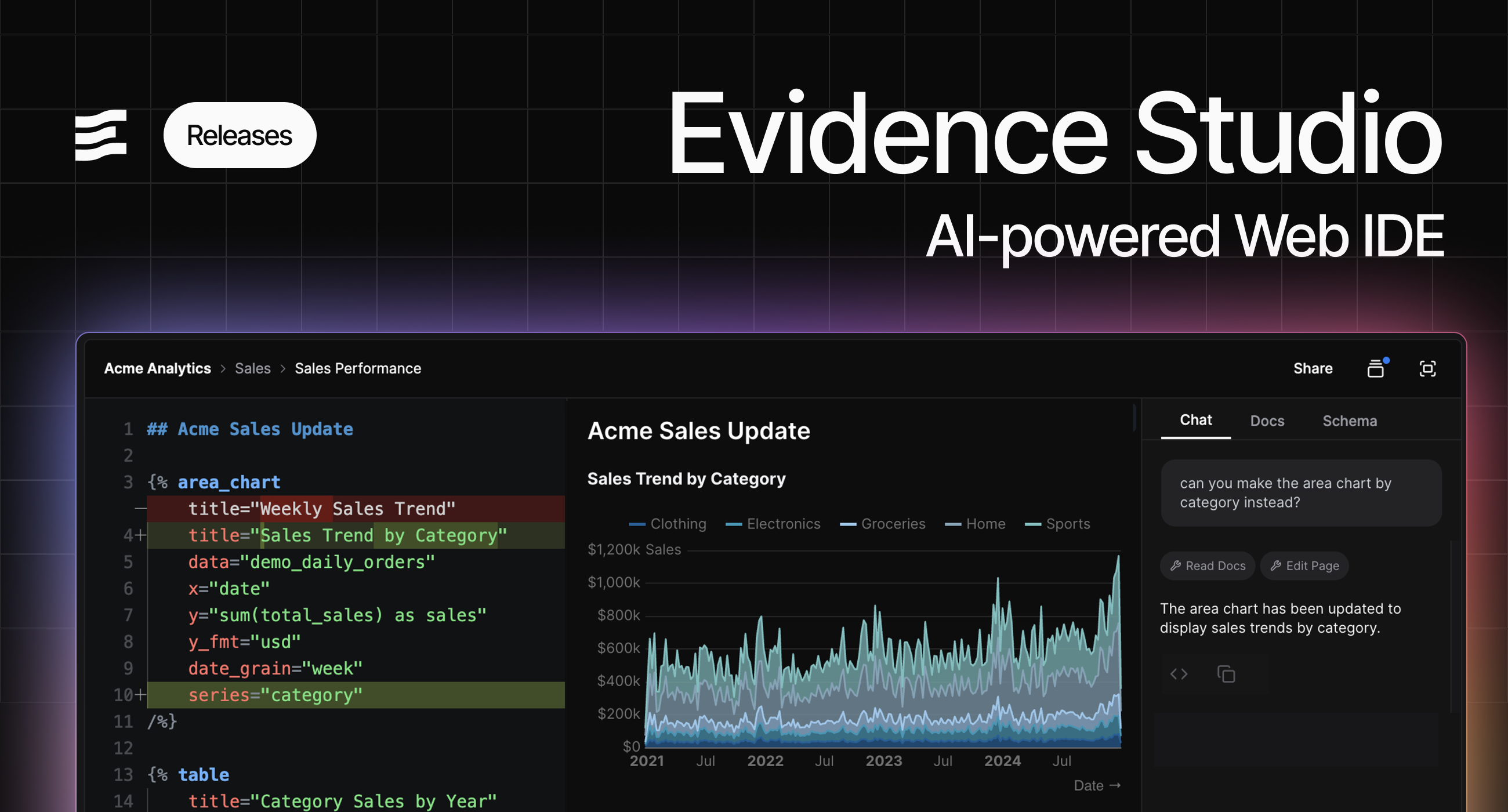
We’re open sourcing the framework that powers Evidence Studio.

We’re open sourcing the framework that powers Evidence Studio. We’re calling it Evidence Core.
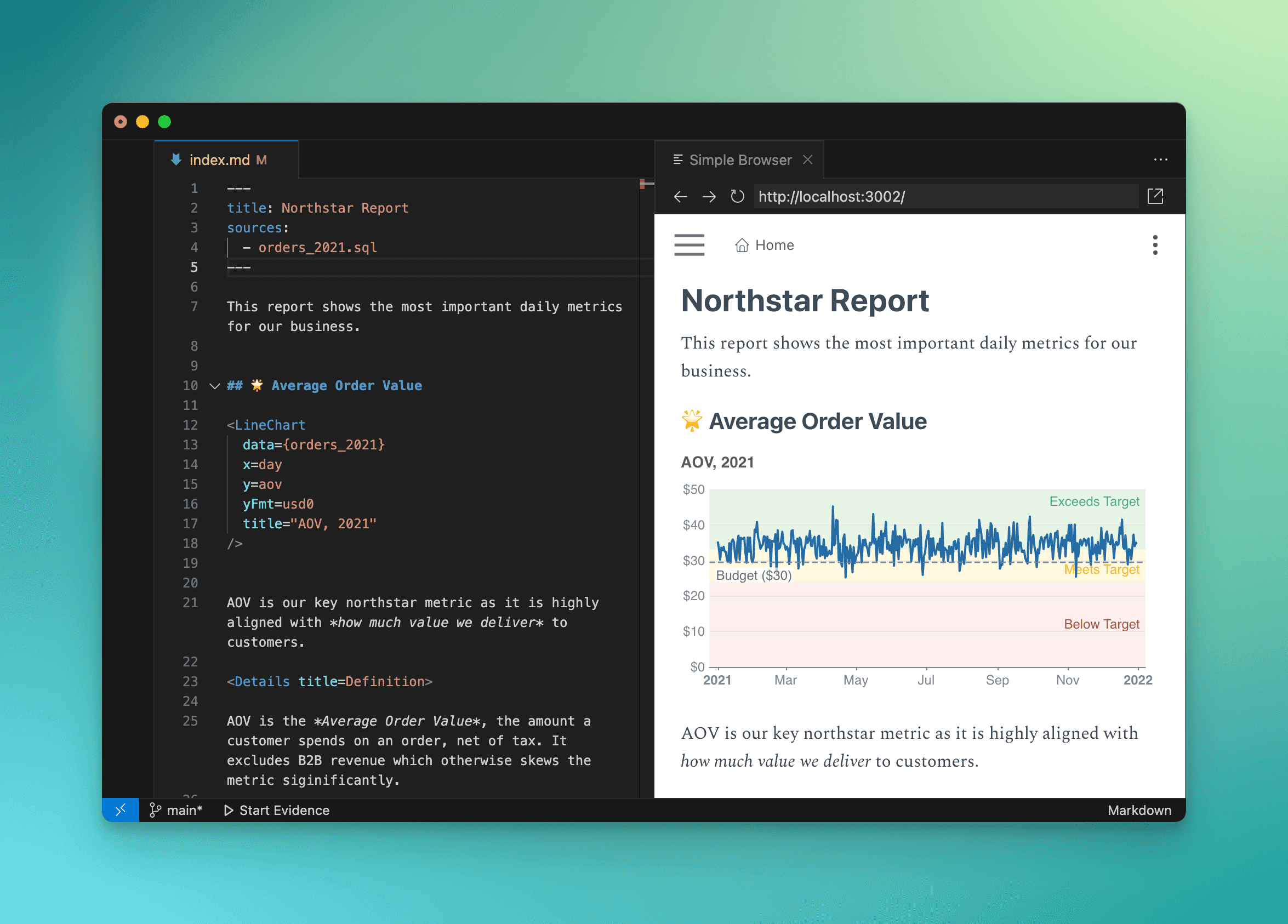
Evidence Core makes major changes and improvements to our open-source framework, but the fundamental promise is the same: the best framework for building data apps with coding agents.
Going forward, we have two products sharing the same open-source foundation:
- Evidence Core: Open-source framework for building data apps as code
- Evidence Studio: Complete business intelligence platform built on Evidence Core
Why Now
We think agents are going to produce and consume the vast majority of business intelligence content in the future. People will still be involved, but increasingly in the role of steering, validating and curating the systems producing analysis.
That future has made “business intelligence as code” an increasingly obvious proposition. Agents need artifacts they can read, edit and validate. Humans need diffs they can review and consistent outputs they can share.
Agents are also changing how software gets adopted. A coding agent can read the documentation, install a tool and build something useful against a real problem before anyone books a demo or fills out a form.
The best teams increasingly expect to evaluate software this way. They want to try it on their own data, inspect how it works, adapt it to their environment and deploy it on their own terms.
Open source makes that workflow possible. It also keeps the resulting projects portable and allows the ideas shaping the framework to come from anywhere.
We’re building the best way for people and agents to build analytics together, and we think the only way to do that is to build in the open.
What’s new in Evidence Core
Live queries
Evidence Core connects directly to your data warehouse.
When someone interacts with a deployed project, its components query the underlying database. You no longer need to run a build to refresh the data in a project.
Metrics
Evidence Core supports standalone metrics that can be reused across components.
A calculation such as revenue can be defined once in a YAML file and referenced throughout a project. If the definition changes, you update it in one place instead of hunting through every chart and table where the calculation appears.
New syntax
The new syntax is terser and more declarative.
Components manage their own queries and aggregations, so projects contain significantly less code to represent the same content.
The syntax can also be validated statically, which means errors can be caught without first running the project. This is particularly useful for coding agents. They get a specific error when they write invalid markup instead of starting the project and trying to infer what broke.
New CLI
The CLI includes the development server, validator, production server and documentation in one standalone binary.
Self-hosting
Evidence Core projects build into Docker containers and include basic authentication. You can run them wherever you host containers.
Or you can deploy to Evidence Studio with a single CLI command. Studio adds a hosted development environment, email distribution, page-level access control, the Evidence analytics agent and a hosted MCP server.
If you’re using our previous open-source project, the CLI includes a migrate command that handles most of the move to Evidence Core.
Try Evidence Core
The easiest way to start is to ask any coding agent:
Take a look at docs.evidence.dev/cli and help me start an Evidence project.